




The Tianluokeng Tulou cluster in Nanjing county. [Photo/Zhangzhou Municipal Bureau of Cultural Heritage]
Fujian province is home to five UNESCO World Heritage sites, including Fujian Tulou, Gulangyu Island, and Quanzhou, which were added to UNESCO World Heritage List in 2008, 2017, and 2021, respectively.
Fujian Tulou
Fujian Tulou comprises 46 earthen residential buildings spread across the counties of Yongding, Nanjing, and Hua'an. Built between the 15th and 20th centuries, these large, fortified structures served as communal residences for extended clans in the mountainous regions of southeastern China.
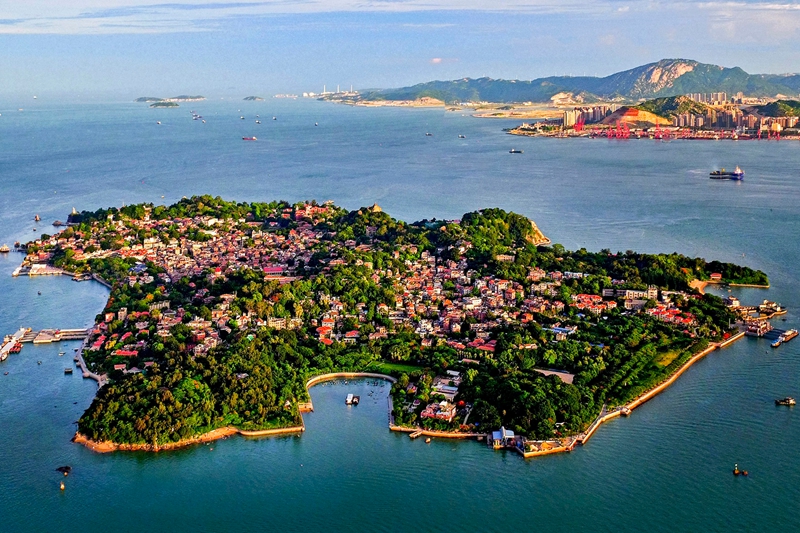
An aerial view of Gulangyu Island, also known as Kulangsu. [Photo/Xiamen Kulangsu Scenic Area Administrative Committee]
Kulangsu, a historic international settlement
Gulangyu Island, also known as Kulangsu, is a small island located on the estuary of the Jiulong River, facing the city of Xiamen. The island has developed into an international community since the opening of a commercial port in Xiamen in 1843, with Gulangyu gaining international settlement status in 1903. The heritage site includes 931 historic buildings, along with roads, gardens, and landscapes reflecting a mix of Chinese and international architectural influences from the 19th and early 20th centuries.
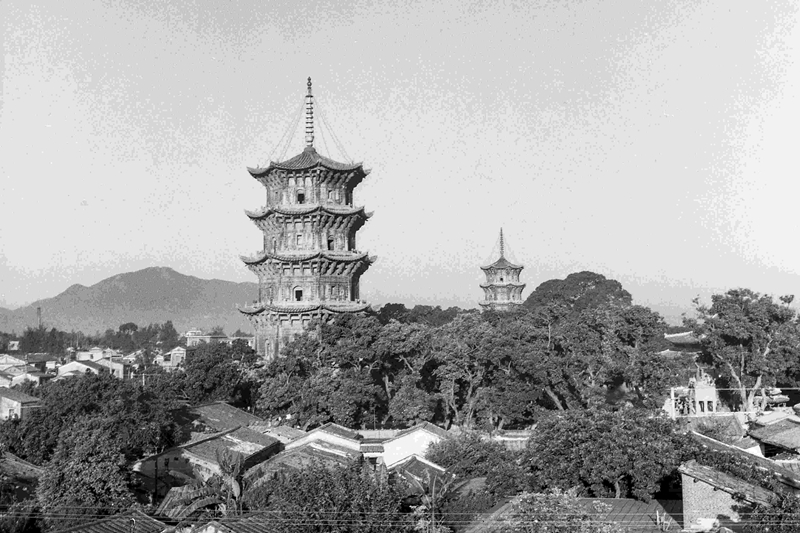
Quanzhou's East and West pagodas in 1984. [Photo/Cheng Dongdong]
Quanzhou: Emporium of the world in Song-Yuan China
Known as Zayton in historical Arabic and Western texts, Quanzhou prospered as a major maritime trading hub between the 10th and 14th centuries. The serial site comprises the 11th-century Qingjing Mosque, ancient bridges, docks, pagodas, and administrative remains, as well as archaeological sites related to ceramic and iron production, reflecting the city's role in maritime trade and its links with China's interior.

Copyright © General Office of Fujian Provincial People's Government
Website Identification Code 3500000049Registration Number: 15003084
All rights reserved. The content (including but not limited to text, photo, multimedia information, etc) published in this site belongs to fujian.gov.cn.
Without written authorization from fujian.gov.cn, such content shall not be republished or used in any form.
